Wednesday, March 30, 2011

The Industrial Revolution brought us the....

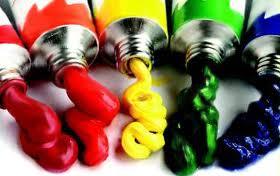
The Industrial Revolution brought about many changes in the world including changes in the art world. The Industrial Revolution gave us the steam engine that changed the way people traveled… it also gave us the paint tube that changed the way artists painted. With oil pigments manufactured in tin tubes the artist could take his work afield and paint on location. The French called this painting on location “en plein aire” which literally translates in English as ‘in open air”. Eugene Boudin and Claude Monet were among the first noted artists who chose this method of painting scenes on location instead of from the comfort and restrictions of the studio. They started a tradition that still is strong today as many plein air painters (me included) prefer the open air to the studio. The furnaces of the Industrial Age also brought about the fusing of metal and mineral pigments giving artists a wide array of color choices on their palettes such as cobalt’s and cadmium's. Until the Industrial Revolution pigments were all natural… mostly minerals dug from the ground. These fused pigments gave artists high chroma colors that allowed them to go beyond tonal renderings with earth pigments to intense colorful paintings and the use of expressive color. Van Gogh was a master of expressive color. New vibrant colors, tube paints, and painting on location were the building blocks for Monet and the rest of the Impressionist artists that gave us one of the greatest art movements in history… Impressionism.


"Claude Monet Painting by the Edge of the Wood" by John Singer Sargent 1885

My daughter Olivia and I painting en plein aire...


Thursday, March 24, 2011

Had a blast plein air painting in Burgaw last Sunday!


Confederate Monument
Burgaw, NC

Last Sunday... the weather was beautiful and my plein painting fever was soothed as we (my dad, the Onslow Outdoor Painter's Society OOPS!, and I) converged on the small town of Burgaw, NC. Burgaw was recently highlighted in Our State magazine... click HERE for the article.

The quaint little town offered many painting subjects. Dad painted the old train station and I opted for the Confederate monument at the courthouse.


Burgaw Train Station
circa 1850
We had a great turnout from the OOPS group with about a dozen painters. The town folk were so nice and I met many interesting people. I met a really nice lady whose family have been in the area since the town formed. She showed interest in my painting and may purchase it for a gift. 

Berne Jr. and Bernie Sr.
Plein air outing in Burgaw, NC
3-20-2011


Confederate Monument, Burgaw Courthouse
Burgaw, NC
10x8" oil on canvas plein air 3-20-2011
by Bernie Rosage Jr.


Tuesday, March 22, 2011

Local Hero dies 65 years ago today!

Joseph Humphrey
1920 - 1946
Greater love hath no man than this, that a man lay down his life for his friends.
John 15:13 (King James Version)

65 years ago today, Joseph Humphrey of Kellum, NC, became a local hero... Not for his love of country and 4 years of service in the Pacific with the US Army during World War II but his willingness to sacrifice his life to save a four year old girl and her mother from a house fire early on the morning of March 22, 1946.

He saved the small girl by throwing her out the window and rushed back to save the woman but to no avail... he and the woman died that night from injuries incurred by the fire.

The little girl he saved is alive today and will celebrate her 69th birthday this October. The little girl is my mom, Maggie (Minnie) Humphrey Rosage... the woman was my grandmother, Minnie Hewitt Humphrey... and Joe was my grandfather... my hero!

Thursday, March 17, 2011

Beannacht Lá Fhéile Pádraig!


St. Patrick's Day blessings from Bernie...


Wednesday, March 16, 2011

Do artists have the right, or the responsibility, to impose their political, social, and philosophical beliefs on viewers?


Guernica, oil on canvas, 1937
Pablo Picasso
Guernica is a painting by Pablo Picasso, in response to the bombing of Guernica, Basque Country, by German and Italian warplanes at the behest of the Spanish Nationalist forces, on 26 April 1937, during the Spanish Civil War.
Do artists have the right, or the responsibility, to impose their political, social, and philosophical beliefs on viewers?

In my opinion artists have the right to share their political, social, and philosophical beliefs on viewers. Note I said “share” vs. “impose”, I personally do not feel that anyone has the right to impose anything on anyone. Impose is a strong word that conjures up thoughts of tyranny, dictatorships, and caste systems in my mind. For example, I am a Christian and feel strongly about my beliefs but I think it rude to impose them on anyone. I willingly share my beliefs and testimony with others allowing them make their own decisions about faith. The same can be said for art, or just about anything in life.

All kinds of persons are artists’… they range from the weekend hobbyists to the full fledged professionals. Artists create artwork for two main reasons; 1… to get something out of their work and 2… to give something out of their work. Getting something from their work can range from satisfaction, peace of mind from a stress filled world, to money. Those that give are interested in communicating through their work. They have something to say… it may be bringing awareness to something, righting a wrong, or something as simple as saying, “I was here”. This group of artists not only has a right but have a responsibility to share their voice whether it is for political, social, or philosophical reasons. They can’t help it… it’s in them and it has to come out! The truly great artists learn to balance the getting and the giving!

What do you think?

Thanks for dropping by...
Bernie
"My Oath"
10x8" acrylic on canvas
Bernie Rosage Jr
2010

Friday, March 11, 2011

Bernie's Ramblings: Illusions

The painter's only solid ground is the palette and colors, but as soon as the colors achieve an illusion, they are no longer judged. (Pierre Bonnard)

Those things which are most real are the illusions I create in my paintings. (Eugene Delacroix)


Experience is real. Painting, which comes out of experience, is real. The world is an illusion. (Darby Bannard)
Visit the Gallery of Illusions... for a fun and enlightening time!

M. E. Chevreul
The “Color Phenomena” illusion  color fascinates me. There are several illusions on the site showing how color is affected by surrounding colors. Although I find this fascinating, it is nothing new to me. As an artist, I use these illusions in my paintings all the time. I like to refer to them as principles vs. illusions, just as M.E. Chevreul (1786 - 1889) did in his book, The Principles of Harmony and Contrast of Colours, and Their Applications to the Arts. This book is unquestionably one of the greatest books ever written on color. It dominated the schools of Impressionism and Neo-Impressionism, and, after 155 years, it still is an important reference for artist today.

Chevreul's ideas on color harmony, contrast effects, and optical mixtures were way ahead of their time and have been validated by modern scientific research in visual perception.

Claude Monet
Claude Monet, the father of the art movement know as, Impressionism, revered Chevreul’s book, and applied his theories in his paintings. One can argue that this book and these theories are the foundation for Impressionism.

The Impressionists invented a technique called “broken color” that is still used today by some artists, myself included. They would place small dabs or strokes of color next to each other on their canvases, rarely did they mix colors on their palettes. This broken color method gave the illusion of light in their paintings and allowed the viewer to optically mix the colors in the brain. This also gave their paintings an overall color harmony, since this technique didn’t allow the colors to become dull, or muddy, from being over mixed. If you look at an impressionistic painting up close, you will see abstract shapes and patterns of brushstrokes. Gradually step back, your mind starts to fit the puzzle pieces together and a distinct image appears. This is one of the most appealing thing about viewing impressionistic art, the viewer becomes involved in the process.
Impression, Sunrise, c.1893
Claude Monet

For example, concerning the Law of Simultaneous Contrast, Chevreu states, "In the case where the eye sees at the same time two contiguous colors, they will appear as dissimilar as possible, both in their optical composition and in the height of their tone." Simply put, when two complimentary colors (colors opposite each other on the color wheel; blue and orange, red and green, and yellow and violet) are placed next to each other the contrast is at greatest. The Impressionists brought this theory to life in their paintings, and it brought their paintings to life. The use of complementary colors next to each other creates a visual tension, a vibration of color. It made their paintings hum with excitement, lending more to an emotive quality than a realistic one.

I have used these color illusions in my paintings for years. My greatest reward is when the viewer becomes a part of the visual process, these principles allow that to happen. Like the Impressionists of old, seldom am I interested in capturing what a scene looks like. In my humble opinion, that is boring for the artist and the viewer, I’m wanting the viewer to look through my eyes and catch a glimpse of something more than what something looks like.

Oranges
oil on linen
Bernie Rosage Jr.

Source:
Chevreul, Michel Eugène (1855). The Principles of Harmony and Contrast of Colours, and Their Applications to the Arts (2 ed.). London: Longman, Brown, Green, and Longmans. (English translation)

Thursday, March 03, 2011

New Bern ArtWorks "Celebratin​g the Artists" Exhibit Reception March 11th.

"Across the Field"
Bernie Rosage Jr.
New Bern ArtWorks and Company
“Celebrating the Artists”
at New Bern ArtWorks & Company

New Bern ArtWorks will host “Celebrating the Artists”, an exhibition featuring works by our resident artists. Opening reception will be held Friday, March 11th, from 5pm to 8pm.

The exhibition brings together a unique, diverse group of artists featuring original two and three-dimensional works that reflect a wide range of styles, abstract, impressionistic, realistic, expressionistic, with a wide variety of subject matter. Expect to be moved, dazzled, inspired and awed by what the artists present at this show. Come by and meet with the artists and help us celebrate our artists and their art!

Drop by and meet Bernie and several of the following artists whose work is in the exhibit...

"Todd's General Store
Bernie Rosage Jt.
New Bern ArtWorks and Company
 Marion Adams
Sally Anger
Chris Bennett
Jim Bisbee
Marina Bosetti
Arthur Boucias
Terry Brennan
Chloe Renee Butler
Jason Cardenas
Jean Cheely
Karen Crenshaw
Anne Cunningham
Jill Eberle
Jane Faudree
Jonathan Grauel
"Mitchell's Catch"
Bernie Rosage Jt.
New Bern ArtWorks and Company
Drew Grice Scott Haines
John Hanley
Robert Hennon
Susan Henry
Barbara Hesketh
Pam Holliday
George Hunter
Vickie Lahman
Julie Lawrence
Mitch Lewis
"Blue Ridge Afternoon"
Bernie Rosage Jt.
New Bern ArtWorks and Company

Nancy Lloyd-Hooker
Rena MacQueen
Georgia Mason
Dee Mayer
Mitchell Morton
Rick Nilson
Judith Pixton
Norm Robbins
Bernie Rosage Jr.
Donna Slade CPSA
Joyce Stratton
Marilyn Strother
Vicki Vitale
Ken Wallis
"Vintage Toys" Bernie Rosage Jt.
New Bern ArtWorks and Company

Michaele Watson
Linda Werthwein
Merv Wilkinson
Elsie Williams
Martha Williams


New Bern Artworks & Company
323B Middle Street
New Bern, NC 28560
United States• 252.634.9002
 http://www.newbernartworks.com/
Gallery Hours:
Tuesday - Friday 10:00 am - 5:00 pm
Saturday 10:00 am - 4:00 pm


Wednesday, March 02, 2011

Bernie's Ramblings: An Artist’s Peak Experience

An Artist’s Peak Experience
Abraham Maslow, the inventor of the term, “Peak experience”, says that "peak experiences are sudden feelings of intense happiness and well-being, possibly the awareness of an "ultimate truth" and the unity of all things ... the experience fills the individual with wonder and awe....he feels at one with the world, and is pleased with it ...." They are moments when you feel more at one with yourself and the world, more integrated. You feel happy, even ecstatic, interconnected and in harmony.

For me, as an artist, painting is a struggle. My struggle comes from forcing myself to adhere to an almost daily routine of painting and trying to create order out of all the chaos that surrounds me. Too many times life gets in the way and painting has to take a back seat... but sometimes life gets in the way and inspiration comes. When this happens it's as if the painting I’m working on takes on a life of its own. It's as if divine intervention takes over and I am merely a tool in a higher power’s hands. Unfortunately, this doesn’t happen every time I pick up a brush but it happens enough to give me those “peak experiences” that are forever etched in my mind and that I am eternally grateful for. While painting en plein aire (French term for “on location”) with a group of local artists I had one of those divine encounters or “peak experiences” as defined by Maslow.

We, the Onslow Outdoor Painters Society (OOPS), were painting on location at the Beirut Memorial, Camp Lejeune, North Carolina, on one April afternoon while the azaleas and dogwoods were in full bloom. The OOPS artists were scattered throughout the site painting from various vantage points. I set my easel near the statue at the memorial and opted for a close up of the statue's boots. Since I was positioned at the focal point of the memorial I had the opportunity to meet many nice people. Two of those people opened my eyes and broke my heart creating my peak experience.

Two ladies approached me, commented on my painting and one asked for a business card. As we talked she told me, "My son is buried over there", motioning to the Veterans Cemetery adjacent to the memorial. I was taken back, she was my age and her son was close in age to my three oldest children. I am used to burials of WWII, Korean, and Vietnam veterans over there, older veterans who lived full lives and not someone my children's age. She (wish I could remember her name) mentioned her son was killed in 2004 and that her friend's son was killed less than a year ago. My eyes were opened to how real this war is and my heart ached for these two ladies. I noticed one lady wearing a "Gold Star" necklace knowing well what it represented since my wife's grandmother was a Gold Star mom. She lost her oldest son in Korea in 1950. When I got home, I added the necklace to my painting as a tribute to these two anonymous ladies, their impact on me, and Gold Star moms everywhere. I have four children of my own... my mind can't even imagine what Gold Star moms and families go through.

As I write this... Cpl Johnathan Taylor, age 23, a young Marine from Florida stationed here at Camp Lejeune was the most recently identified death of the War on Terror. He was killed on February 23, 2011 by hostile fire in the Helmand Province of Afghanistan bringing the American casualty toll to 5923. (Operation Enduring Freedom, iCasualties) Whatever your politics may be... I think everyone agrees that we must be mindful and prayerful of our men and women in the military service of our great country. 5923 may simply be a number to some people but to many, it represents lives shaken to their very foundations. I'm talking about the family and friends of this 5923 and unfortunately, future families who will experience the kind of sorrow exhibited by the two women I spoke with as I painted my tribute to them.

My painting, A Tribute to Gold Star Moms, is a visual reminder of my experience of that eventful day. It echoes Maslow’s definition of peak experience through my unity with those two anonymous women, my sense of wonder and awe, and the overwhelming sense of the sublime and divine that I gained from the experience.

In faith,
Bernie

 "A Tribute to Gold Star Moms"
10x8" oil on panel
Bernie Rosage Jr

Monday, February 28, 2011

Would you want an asphalt plant in your neighborhood?

Would you want an asphalt plant in your neighborhood?

Would you want an asphalt plant in your neighborhood? You probably never gave it thought, to be honest, neither had I until a local company filed for the proper permits to build and operate one approximately one mile from my home. Since the company’s announcement to build I have acted like a mad man studying the effects and “what ifs” of a hot mix asphalt plant on local citizens. My studies reveal a reoccurring theme; asphalt plants release millions of pounds of chemicals in the air during production each year. These toxins are unhealthy to breathe and present a problem for citizens living within six miles of a plant. I even joined a local organization of concerned citizens called the PON Foundation (PON), an acronym for “Protecting Our Neighborhoods”, to help in the fight to stop this plant from being built at the proposed location. Asphalt plants should not be allowed to operate in residential areas. I have donated time, money, and service in this fight to protect my family and way of life on this issue.

On February 23, 2010, the Onslow County Board of Adjustment voted to issue a Special Use Permit to Morton Trucking Inc., which will allow the company to build a 200-ton-an-hour asphalt plant near Halltown Road and U.S. 17 (Maps). Areas within a six mile radius that will be affected include: Piney Green, Wolf Swamp, Kellum, Pumpkin Center, Country Club, and the Commons. Largely populated housing developments affected are Country Club, Country Club Hills, Highland Forest, Regalwoods, Fieldcrest, Sunset Acres, Fox Horn, and Jacksonville Commons. Several schools, preschools, apartments, churches, and businesses are also included in the six mile zone that will experience implications from this plant.

A 200-ton-an-hour asphalt plant will release millions of pounds of chemicals to the air during production each year. These chemicals include many cancer-causing toxic air pollutants such as arsenic, benzene, formaldehyde, cadmium, lead, volatile organic compounds, polycyclic aromatic hydrocarbons, and very fine condensed particulates (BRENDL, BRENDL - Asphalt Plant Fact Flyer Sheets). Asphalt fumes contain substances known to cause cancer, coughing, wheezing or shortness of breath, severe irritation of the skin, headaches, dizziness, and nausea. Louis Zeller, science director for the Blue Ridge Environmental Defense League (BRENDL) stated in an interview with the Daily News that, “Arsenic, benzene and formaldehyde are very harmful to children, the elderly, the infirm, and those who work and play outdoors”. Zeller added, “Asphalt pollution is big pollution and exposure to low levels of benzene and other pollutants in the toxic soup emitted by an asphalt plant have been known to cause Leukemia and negatively affect the immune system and bone marrow” (Dewitt). The U. S. Environmental Protection Agency (EPA) reports that very fine condensed particulates called particulate matter can pose the greatest problems because they can get deep into your lungs, and some may even get into the bloodstream. Scientific studies have linked particle pollution, especially fine particles, with a series of significant health problems, including: decreased lung function; aggravated asthma; development of chronic bronchitis; irregular heartbeat; heart attacks; and premature death in people with heart or lung disease (EPA).


Cedars at Northeast Creek
8x10" oil plein air
Bernie Rosage Jr.
 Asphalt plants bring other concerns to communities beyond health issues. Local landowners will suffer adverse impacts to their property values. A 2003 study by BREDL on property values around a North Carolina asphalt plant showed a 27 percent average drop in property value and a 56 percent decrease in areas closest to the plant (BRENDL). Environmental issues cause another concern, especially how run-off from the plants aggregate piles can affect our rivers and drinking water. The proposed plant site adjoins a protected area of wetlands on the Little Northeast Creek. Heavy rains from hurricanes and nor’easters, common to our area, could prove devastating to our local rivers as the Little Northeast Creek feeds the Northeast Creek which runs into the New River. The water and river concerns have brought the New River Foundation and the White Oak-New Riverkeeper Alliance organizations into the fray. All their hard work protecting and cleaning up our rivers over the past decade could easily be wiped out with a single hurricane. Our rivers and coastline draw tourist from all over the state and beyond, one can only imagine the economic impact on Onslow County if we lost these prized resources.

Most people embrace new industry which bring jobs and revenue to our area, myself included, but there are cases where the costs outweigh the profits. An asphalt plant in a populated area is such a case. The proposed plant is said to employ four to ten people on site. The county revenues generated by these salary numbers will not come close to offsetting the loss in county property taxes due to the 27 to 56 percent decrease in property values. There have been claims that we breathe in toxins every time we fill our car’s gas tank. This is true but the two minutes a week it takes to fill our tanks cannot be compared to the twenty-four hours a day, seven days a week that an asphalt plant releases toxins into the air. Some may argue that the North Carolina Division of Air Quality has the responsibility of keeping our state’s air clean and monitoring asphalt sites to make sure they follow proper guidelines. This is true, but the unabashed truth is that they are underfunded, under staffed, and cannot monitor all the state plants in a timely fashion.


View from my driveway.
Plein air oil on canvas.
 The fight to stop the proposed site of this asphalt plant is a personal one for me. I am a landscape artist and the idea of not being able to paint outside in my own yard frightens me. As an artist, I know the dangers cadmium and lead can present since they are incorporated in many oil paints. I make sure I use the utmost care when handling them. I am also aware that toxins do not have to smell to present a problem. They can be odorless as in the odorless mineral spirits I use to clean my brushes which is extremely dangerous if not properly handled.

My daughter and
painting buddy,
Olivia.
Art is my passion and my livelihood. The real cause for my fight goes beyond passion, livelihood, and property values; I fight for my daughter’s health and way of life. My nine year old daughter has asthma and an asphalt plant in our neighborhood means that she will never be able to play outside in our yard again. I’m not against asphalt plants; I enjoy driving on paved roads, I merely have no use for them in our neighborhoods. A simple solution is to build the plant in an unpopulated area where people could have the choice to live near it. When the bottom line and a handful of jobs are more important than our quality of life, we are in a sad state of affairs.

All paintings in this blog post were painted en plein aire near my home. All are within the area that will be affected by the proposed asphalt site location. Most of the locals will recognize these scenes. Sad to think that if the permit is granted by North Carolina Division of Air Quality (public hearing March 1st... click HERE for details) I will never be able to recreate these paintings on location ever again without adverse health effects!

A concerned citizen, artist, and father...
Bernie

More paintings...


Wednesday, February 23, 2011

Critique of Van Gogh's... Wheat Field and Cypress Trees

Wheat Field and Cypress Trees
Vincent Van Gogh
1889
Description
Vincent Van Gogh is one of history’s most influential artists. His work and style is easily recognizable, even among those with a limited interest in art. I chose his painting, Wheat Field and Cypress Trees for a recent critique assignment. Van Gogh used oils as his medium and canvas as his support for this landscape which measures 28 ½ by 36 inches. The original, painted in 1889, is on display at the National Gallery in London, England. The painting depicts a natural landscape consisting of a wheat field, cypress trees, distant mountains, and a cloudy sky. The painting is impressionistic in style matching the new bright palette of colors used by the Impressionist artists of Van Gogh’s day, but he takes Impressionism to the next level with his use of expressive color, texture, and line.

Analysis
The majority of the painting is painted in middle tones with the exception of the dark contrasting cypress trees. There is cool color dominance throughout the piece except for the warm yellows of the wheat field. Van Gogh uses an analogous color scheme of yellow, green, and blue with green being the dominate color. These colors next to each other on the color wheel plus white give the piece a color harmony with a limited palette. Arial perspective is evident in the mountains as the cool pale blues push them back into the distance. The horizon is set on the lower third of the canvas and the elements are designed in such a manner to lead the eye throughout the painting and straight to the focal point… the cypress trees. The eye travels along the color contrast of the grass up the right and then to the left where it slows at the subordinate element of the smaller rounded bushes… From there the eye moves along the diagonal line of the mountains and stops at the strong vertical of the cypress trees. This point is the center of interest and is emphasized by being the darkest point on the canvas. The eyes then dance a while in the circular strokes of the clouds only to be funneled back to the focal point of the cypress trees. There is an asymmetrical balance to the painting created by the tall dark conical shape of the cypress trees and the small rounded shape of the bushes to the left. There is a rhythm in the sky area with the repetition of swirling strokes.


Interpretation
As I view Wheat Fields and Cypress Trees, I get the sense that I am there standing in the field feeling the wind blowing on my face. I can see the wheat swaying and the clouds rolling. This effect is echoed in Van Gogh’s brushwork as each stroke seems to move. The impasto texture only adds to this sensation for me. It’s as if Van Gogh wants me to feel the sensations he felt while painting this! I do not know if he painted this “en plein aire” (on location) but I’m sure that it was at least done from plein air studies and/or memories of the open air… it suggests that to strongly not to have been experienced firsthand.


Judgment
Wheat Fields and Cypress Trees and other works by Vincent Van Gogh stand out in a crowd as compared to other works of his and our time. Van Gogh’s use of impasto texture, linear stokes that followed the contour of shapes like clouds, grass, hillsides, etc., plus his uses of expressive color make his work unique. These techniques impacted his work so much that it became an easily identifiable style… his style. His work wasn’t accepted in his time because the public had never seen anything like it but it has had a major impact on the world and art ever since. I feel this painting was successful even though it was ahead of its time. Would I change anything on this painting to make it better?... Heck no! It speaks to me as is!

Some say Van Gogh was crazy but I call him a genius. For me, Wheat Fields and Cypress Trees embodies enjoying nature at its fullest. It has a “stop and smell the roses” attitude. Was that what Van Gogh was trying to convey? I think so!

Thanks for dropping by...
Bernie